
Bodycam Shows Chicago Cop Waited 90 Seconds After Shooting Partner
Bodycam footage shows Officer Carlos Baker took cover for 90 seconds after fatally shooting partner Krystal Rivera, never rendering medical aid.
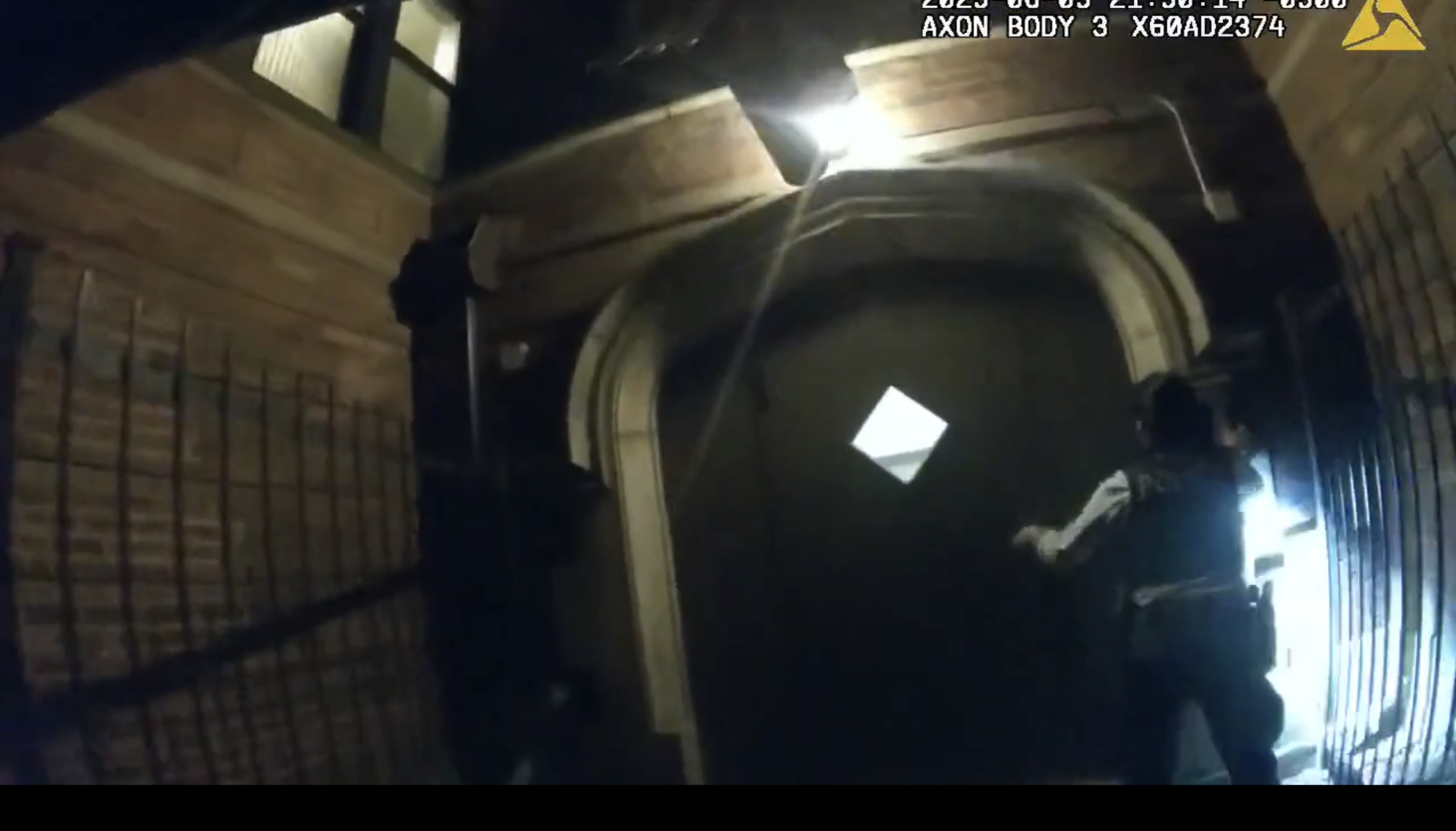
Chicago Police Officer Carlos Baker sat in a stairwell for more than 90 seconds after accidentally shooting his partner, body camera footage released Friday shows, leaving Officer Krystal Rivera bleeding on the floor while he called for help from a position above her.
The Civilian Office of Police Accountability published the footage, which captures the sequence from Baker’s body camera. The two officers had been chasing a man into a Pilsen apartment building when Baker kicked open a door and encountered a second man who appeared to be pointing a gun at them. Baker turned, appeared to trip, and fired. The round struck Rivera.
He ran upstairs. He didn’t go back to her.
When Baker did return down the stairs, he stepped over Rivera’s body before eventually bringing her down. COPA says the video doesn’t show Baker rendering any medical aid to Rivera at any point during that stretch.
Baker gave a COPA investigator a sharply different account of what was in his head. “I will die for her, that I had to get to her,” he said, according to a recording obtained by the Illinois Answers Project and the Chicago Sun-Times. He added: “Because she’s so strong and I told her that I would never, never let anything happen to her.”
On the shooting itself, Baker described what he called a “fatal funnel,” a tactical term for a dangerous confined space like a breached doorway. He said he believed a man inside the apartment had a rifle trained on him the instant that door came open. “I thought I was about to die in that doorway because action, as we’re taught, action beats reaction,” he said. Then: “I dove out of the way and that was when I heard a pop.”
Rivera’s death was the first fatal officer-on-officer shooting in Chicago in nearly 40 years. It’s also the first such incident since the Chicago Police Department rolled out body cameras broadly, which made the footage’s release both a matter of public record and a focal point for legal scrutiny. The shooting occurred in 2026, and COPA’s release of the videos in April drew immediate attention.
COPA released only two videos connected to Rivera’s death. The agency didn’t disclose how many recordings it’s holding back, a departure from standard practice that appears to conflict with city policy requiring video and investigative reports to be made public when an officer is shot. That gap hasn’t been explained.
That omission matters. Accountability advocates and civil liberties groups have spent years pressing Chicago to apply full transparency to officer-involved shootings, especially when the victim is a fellow officer and the facts are disputed. The Chicago Police Department’s use-of-force policies were revised substantially in the wake of the Laquan McDonald fallout. Those revised policies require officers to render aid to a wounded person when it’s safe to do so.
Whether Baker’s 90-second delay satisfies that standard is one of the core questions COPA investigators are working through. The footage doesn’t resolve it cleanly. Baker’s own words, captured in that investigator interview, describe a man convinced he was about to be killed. The video shows a man who didn’t go back to his partner.
Both things are documented. How COPA weighs them will shape not only Baker’s professional fate but also what the city’s accountability apparatus is willing to say, clearly and on the record, about an officer who shot another officer and then sat upstairs while she lay on the floor below.
Rivera’s death at 04 seconds into a chaotic door-breach is the kind of incident that Chicago’s oversight machinery was built to examine. The 17-second fragments of footage, the 40-year gap in precedent, the 90-second window of inaction: the numbers are specific, and they’re on tape. What they mean is still being decided.