Why Chicago's Flooding Problem Is Getting Worse
Chicago's flooding crisis is intensifying. New research shows intense rainfall has increased sevenfold over a century, overwhelming aging sewer infrastructure.
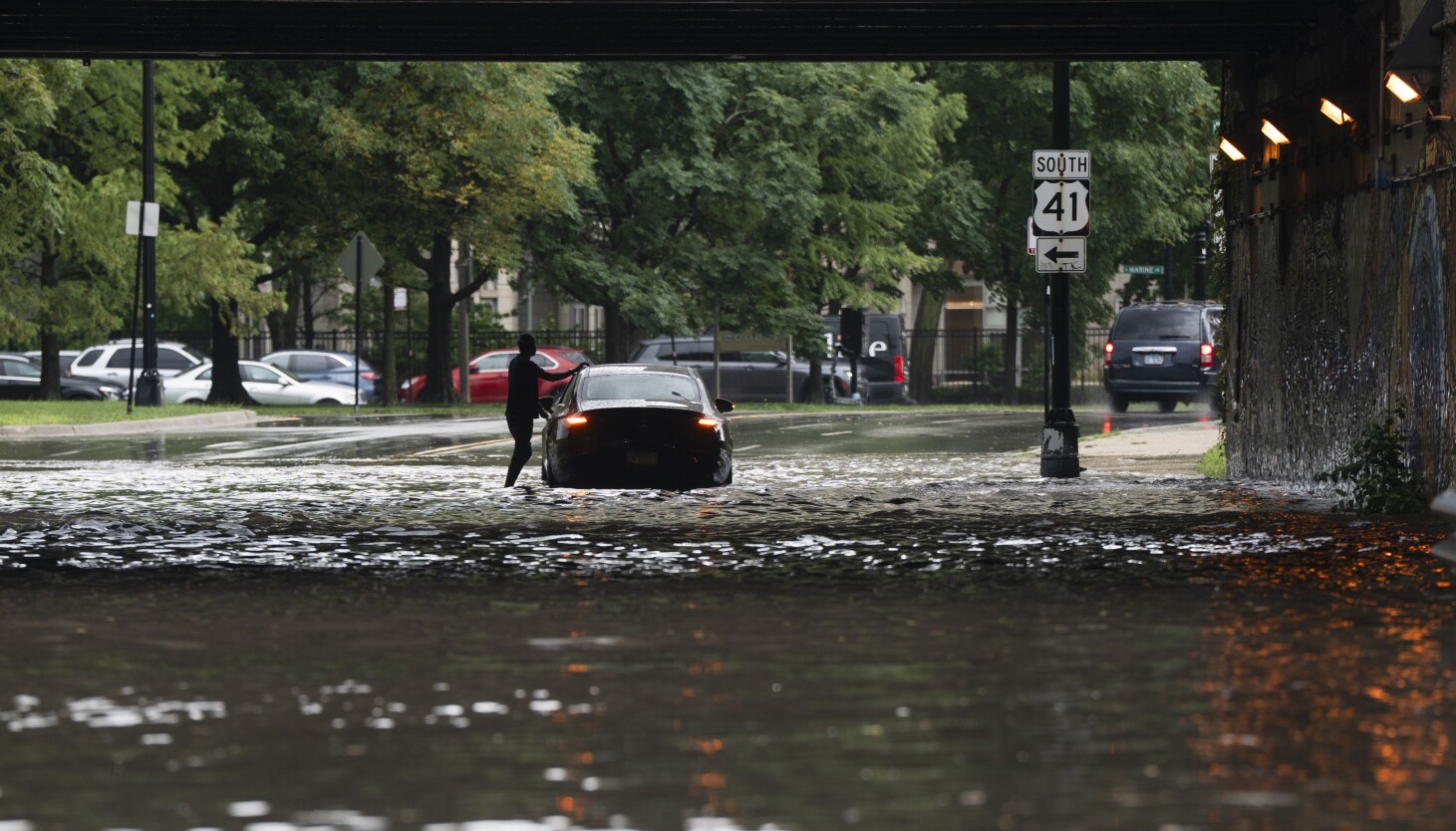
Chicago’s flooding has gotten measurably worse, and a University of Illinois research document is finally attaching hard numbers to what residents across every neighborhood have been living with for years.
The document is called “Bulletin 76.” Scientists at the University of Illinois produced it as a formal research communication, and its findings don’t leave much room for comfort. Over the last century, the probability of intense rainstorms hitting Chicago has increased sevenfold. Those storms can dump more than 8.5 inches of rain within a 24-hour period. The city’s sewer system, engineered decades ago, starts losing ground after roughly 2 inches in that same window. That gap isn’t closing. It’s widening.
“What is considered safe and adequate today may not be true in the future,” the researchers wrote, framing the risk in terms of people, homes, and buildings citywide.
The Illinois State Water Survey tracks this kind of data regionally, and the trajectory it shows isn’t reassuring. Rainfall intensity across northeastern Illinois has climbed steadily, and climate projections from the Bulletin 76 research suggest the next 25 years will bring conditions significantly more severe than what we’ve already seen.
Chicago’s drainage struggles aren’t new. They’re baked into the city’s geography. The place was built on a swamp, and every generation of city engineers has inherited the same basic problem: too much water, not enough speed to move it. The current sewer network wasn’t built to handle what climate scientists now project, and rebuilding an underground system beneath one of the country’s densest urban grids doesn’t happen quickly or cheaply.
Construction on the so-called Deep Tunnel began roughly 50 years ago. It was the city’s answer to a practice that had gone on for generations: dumping sewage overflow straight into the Chicago River. The Metropolitan Water Reclamation District of Greater Chicago built the Deep Tunnel as a multi-billion-dollar network of underground tunnels and massive holding reservoirs designed to capture floodwater before it reached the river or Lake Michigan. The Thornton Quarry reservoir in the south suburbs is among the largest components of that system. The District has spent decades expanding capacity there and elsewhere.
It’s worked, to a point. The river isn’t getting hit as hard as it once did. But the Deep Tunnel doesn’t fix what happens inside people’s homes.
Neighborhood sewer lines in Chicago carry both stormwater and sewage through the same pipes. When those combined lines back up during a hard rain, the overflow has one place to go. Basement drains. Furniture, appliances, flooring, finished rooms: gone. The health conditions that follow can be serious, especially in older housing stock where residents don’t always have the resources to remediate quickly. Damage estimates across the city run into the hundreds of millions of dollars.
“The system simply can’t drain water as fast as these storms are delivering it,” said a spokesperson for the Metropolitan Water Reclamation District of Greater Chicago, describing the core operational challenge the agency faces as rainfall intensity increases.
South Side and Northwest Side neighborhoods have historically taken some of the worst of it, though the Chicago Sun-Times reported in 2026 that the risk now extends across every Chicago neighborhood without exception. That’s a shift. Flooding used to feel like somebody else’s problem if you lived in the right zip code. It doesn’t anymore.
The speed problem is at the center of all of this. Rain falls harder and faster than aging pipes can move it. By the time water reaches the Deep Tunnel’s massive intake structures, streets and basements have already taken the hit. The U.S. Environmental Protection Agency’s sewer overflow resources outline federal standards for combined sewer systems, but those standards can’t make old infrastructure perform like new infrastructure. They won’t dig the pipes any deeper.
What Bulletin 76 makes clear is that 2026 is not the worst year Chicago residents will face. The sevenfold increase in storm probability happened over the last century. The next 25 years, according to the University of Illinois research, will stack additional intensity on top of a system that’s already stretched. Chicagoans who haven’t flooded yet shouldn’t assume they’re exempt.