
Chicago School Board Election 2026: What You Need to Know
Chicago voters will elect all 21 school board members for the first time. Here's what's at stake and why this election matters for 320,000 students.
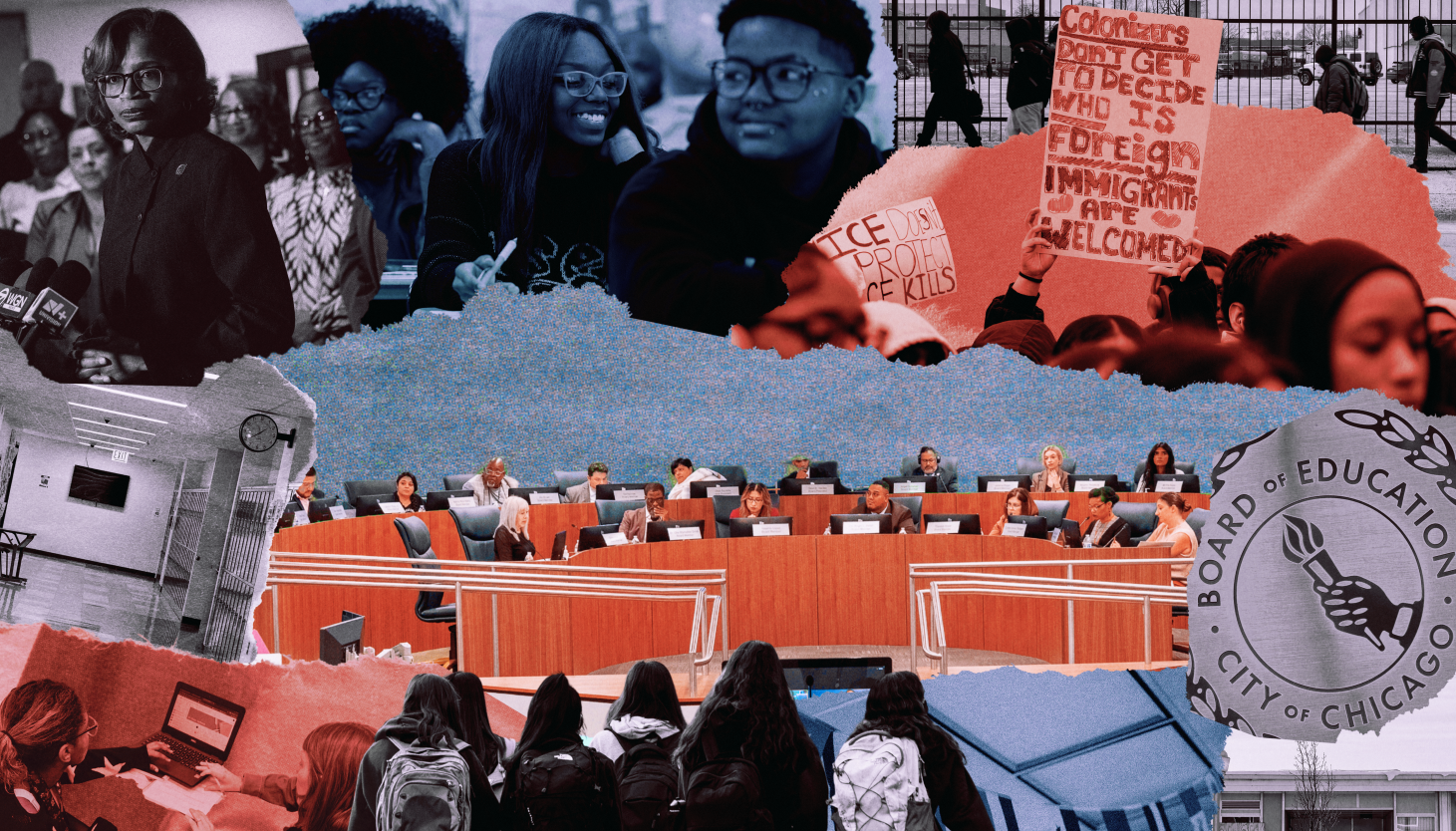
Chicago voters will choose all 21 members of the Chicago Board of Education this November, the first time in the city’s history that every seat on the board goes before the public at once.
It’s a hard turn from how things have worked for decades. Mayor Brandon Johnson still held appointment power over most of the board as recently as 2024, when only 10 of 21 seats appeared on the ballot during Chicago’s first-ever school board election. That fall, Johnson filled the remaining 11 seats himself, along with naming the board president. None of that carries over to 2026. Every seat is contested. No mayoral appointments remain.
Two out of three Chicago residents didn’t know the board was going fully elected, according to a poll by Kids First Chicago, the nonprofit that has been tracking public awareness of the changeover. That’s a staggering figure when you consider what the board actually controls.
The Chicago Board of Education sets district-wide policy. It approves the annual budget, hires and fires the CEO of Chicago Public Schools, and votes on school openings and closures across the North Side, South Side, and West Side. It sets the property tax levy that funds CPS operations, a line item with direct consequences for every homeowner in the city. The district serves roughly 320,000 students. The decisions this board makes aren’t abstract, they land in classrooms and on tax bills.
Which makes the awareness problem serious. “Voters don’t always know exactly what they’re voting on when they walk into a school board race,” said a Kids First Chicago official who has studied the transition. “That’s what makes the awareness gap so consequential.”
The 2024 cycle was incomplete by design. Illinois lawmakers structured the transition so that voters would first choose 10 representatives, with Johnson retaining authority to appoint the other 11 alongside the president. It was a half-step. The full transfer of power was always set for this cycle, with April 19 filing deadlines already shaping who’s in and who’s out for the November contest. Chicago Elections has race-by-race information for voters tracking candidates in their districts.
What’s changed in the months since 2024 is the money. Donors and political action committees don’t wait for candidate filing deadlines. They’ve been moving already, and advocates who spent years pushing the Illinois legislature to authorize an elected board are watching with concern. School board seats carry no salary. They carry enormous power over a district with a budget running into the billions, and that combination has historically pulled outside spending in every major city that’s gone through a similar transition. Chicago won’t be different.
The worry isn’t hypothetical. In cities where elected school boards control large urban districts, well-funded outside groups have shaped outcomes in ways that neighborhood residents didn’t see coming until after election night. The Chicago Sun-Times has been tracking the financing picture as it develops, and what’s emerged so far suggests this November will be expensive.
Advocates who pushed the Illinois transition for years wanted community voice in a governing body that had operated for too long inside City Hall’s orbit. The elected board was the answer. But there’s a version of an elected board that looks democratic on paper and functions like a different kind of insider arrangement, one where the insiders just write checks instead of holding appointments.
That’s the tension heading into this cycle. The Illinois State Board of Education sets the broader regulatory context within which CPS operates, but it’s the local board that controls day-to-day decisions affecting 320,000 kids across 21 districts.
Sixteen seats are up for the first time this cycle. The remaining five were elected in 2024 and don’t face voters again until their terms expire. The full 21-member board, once seated after November, won’t include a single appointee. Johnson can’t put anyone on it. That’s the shift advocates spent years building toward.
Whether Chicago voters show up ready for it is the open question.