
Chicago City Council Picks Villegas as Zoning Chair
Chicago City Council elected Ald. Gilbert Villegas as Zoning Committee chair, dealing Mayor Brandon Johnson another political defeat amid ongoing power struggles.
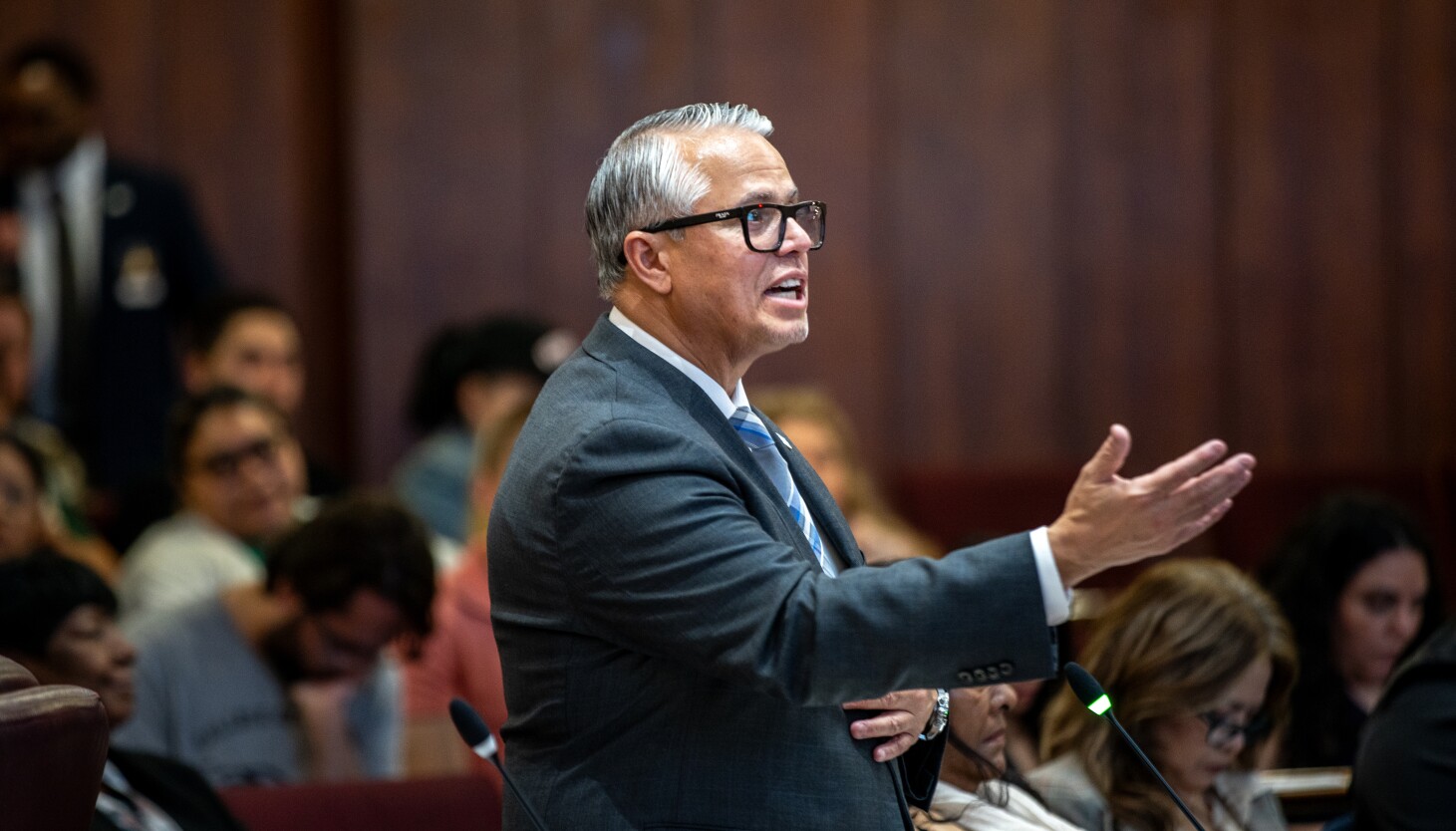
Chicago City Council broke a months-long committee deadlock Wednesday, voting to install Ald. Gilbert Villegas as Zoning Committee chair in a move that hands Mayor Brandon Johnson yet another stinging loss at the hands of a Council majority that’s shown it doesn’t need him.
Ald. Derrick Curtis of the 18th Ward was elected to lead the Economic Development Committee, taking the seat Villegas vacated. The reorganization clears the way for roughly 85 stalled development projects that had been frozen since fall, a backlog that’s grown long enough to draw alarm from business groups and neighborhood advocates alike.
Wednesday’s vote wasn’t close in terms of the political math. Johnson had twice tried to install his preferred candidates to run Zoning. He pushed Ald. Byron Sigcho-Lopez and, when that failed, backed Ald. Daniel La Spata for the chairmanship. He couldn’t get either one across the line. The Council didn’t give him a third shot.
“It certainly is another example of the Council stepping up and sort of rescuing an item to fill a void of what’s not happening on the Fifth Floor that’s consistent with what took place with the budget,” said Ald. Marty Quinn, one of Johnson’s sharpest critics in chambers.
Quinn’s budget reference wasn’t throwaway. Villegas and Curtis were among the Council rebels who passed an alternative spending plan last fall over Johnson’s objections, killing the mayor’s bid to impose a corporate head tax. That same bloc has been a thorn in Johnson’s side ever since, and the committee shakeup, as reported by the Chicago Sun-Times, confirmed the coalition’s hold hasn’t slipped.
What’s at stake in Zoning isn’t abstract. The Chicago Department of Planning and Development tracks the pipeline of projects moving through the city’s approval process, and a Zoning Committee that won’t meet means developers can’t build, neighborhoods can’t move on planned affordable housing, and the city leaves money sitting on the table. Ald. Brian Hopkins made the practical case bluntly.
“It’s the one committee that simply must meet or you get this massive backlog of important legislative matters that would cause real harm to allow them to languish. We can’t let it happen,” Hopkins said.
The seat opened when Walter Burnett, who’d chaired Zoning for years, retired from the Council. Acting Chair Bennett Lawson took over but drew a hard line in late November 2023: give him the post permanently and let him hire his own staff, or he’d walk. He wasn’t bluffing. Lawson refused to convene a single Zoning Committee meeting in January.
He blinked in February. Lawson chaired one session that pushed forward Foundry Park, a scaled-back iteration of the Lincoln Yards development on Chicago’s North Side. That meeting didn’t resolve anything deeper. When the full Council gathered on Feb. 18, the old fault lines reappeared. Members of the Black Caucus were pushing to seat Villegas in Zoning and put Ald. David Moore of the 17th Ward into Economic Development. Lawson’s attempt to install two fellow freshman alderpersons as vice-chairs ran into resistance and went nowhere.
Villegas has been in the Council since 2015, longer than either of Johnson’s failed picks, and he’s built a reputation as someone who can move a crowded docket. Whether that track record translates under the political pressure of the current moment is something the city will find out fast given the size of the backlog.
“The Council,” he said, per the Sun-Times account, signaling a disposition toward collective action over deference to the Fifth Floor.
The Illinois Policy Institute tracks city budget and governance data and has documented the cost of committee paralysis in prior cycles, noting that delayed zoning approvals carry measurable economic drag on neighborhoods still trying to recover from the pandemic’s financial aftermath.
Johnson’s office hasn’t said publicly how the administration plans to work with a Zoning chair it opposed. What’s clear is that the 2026 Council majority has now done this twice: once on the budget and once on committee leadership. Curtis takes over Economic Development at a moment when the city’s dealing with questions about big commercial corridors and whether Johnson’s development priorities survive contact with an aldermanic body that’s writing its own playbook.